Middle Part Taper Fade Straight Hair: 2026 Style Guide
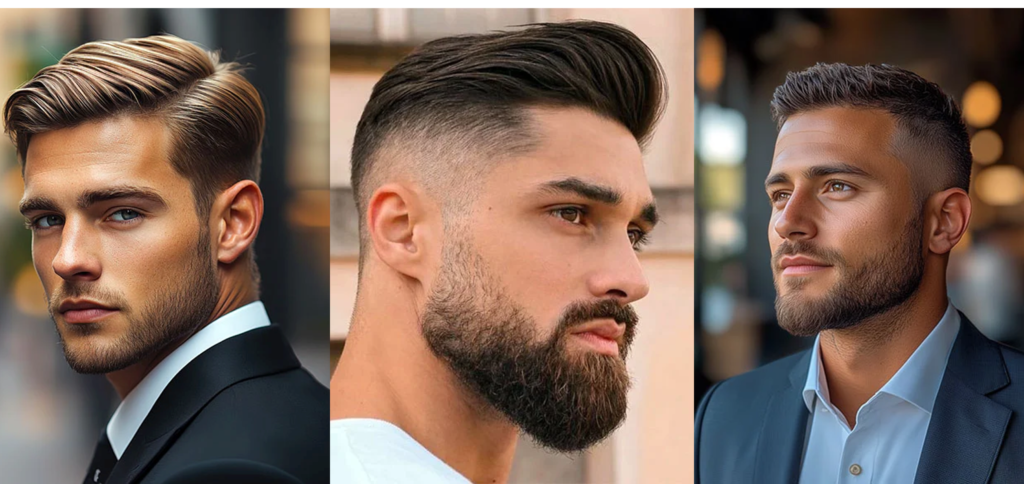
The middle part taper fade straight hair combination reigns supreme as the most versatile men’s hairstyle of 2026. This modern haircut blends clean barbershop precision around the sideburns with effortless, flowing curtain layers across the crown. Men with naturally straight strands often struggle with limp, flat hair that falls forward awkwardly into their eyes. Pairing a center part with a tailored taper fade introduces structural lift at the roots while cleaning up distracting bulk around the ears and neck. Whether you prefer a casual nineties skater drape, an athletic K-pop curtain fringe, or a boardroom-ready flow, this haircut delivers modern definition and youthful charisma. The comprehensive quick reference table below highlights the top middle part taper fade variations for straight hair textures.
| Haircut Variation | Top Length Needed | Best Matching Face Shape | Daily Styling Effort |
|---|---|---|---|
| Classic Low Taper Middle Part | 3 to 5 inches | Oval, Square, and Diamond | 3 minutes with sea salt spray |
| Mid Taper Textured Curtains | 4 to 6 inches | Round, Heart, and Rectangle | 5 minutes blow-dry with brush |
| Messy Fluffy Curtain Fade | 3 to 4 inches | Oblong and Triangular | 2 minutes matte powder finger tousle |
| Short Crop Middle Split Taper | 2 to 3 inches | Square and Chiseled Jawline | 1 minute towel dry and paste |
| Slick Modern Executive Curtain | 5 to 7 inches | Oval and Angular Faces | 4 minutes comb and pomade |
Quick Table of Contents
What Defines a Middle Part Taper Fade on Straight Hair?
Why Straight Hair Pairs Naturally with Curtain Tapers
Classic Low Taper Fade with Straight Middle Part Flow
Mid Taper Fade with Textured Curtain Bangs
Messy Fluffy Middle Part with Drop Taper Transition
Slick Polished Middle Part with Clean Razor Taper
Short Crop Middle Part with Tight Temple Taper
Barber Communication Guide: What to Request in the Chair
How to Blow Dry Straight Hair for Maximum Middle Part Volume
Best Lightweight Styling Products for Natural Flow and Hold
Common Mistakes That Ruin the Straight Hair Middle Part Flow
Daily Maintenance Routine for All Day Center Part Shape
What Defines a Middle Part Taper Fade on Straight Hair?
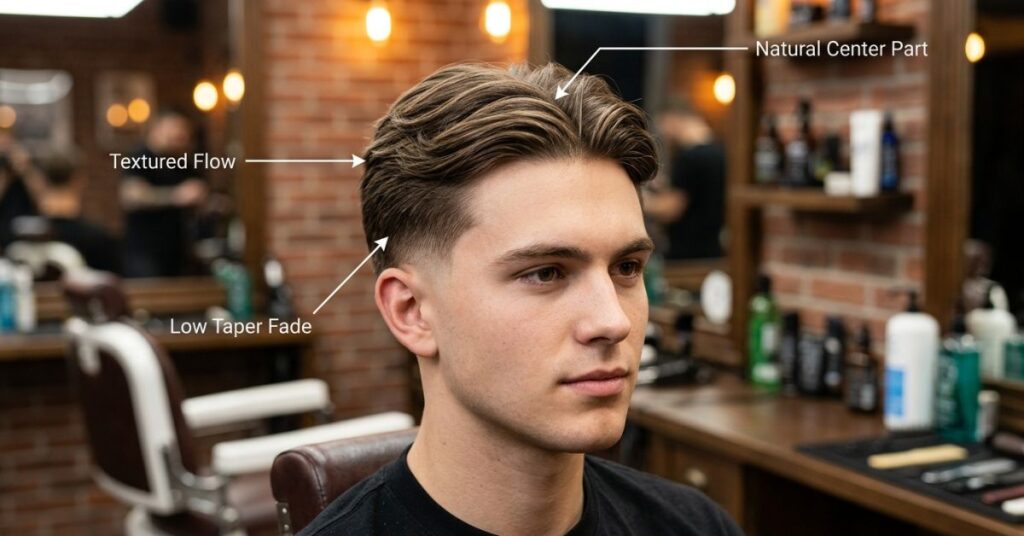
A middle part taper fade combines two distinct barbering disciplines into a cohesive, fashionable silhouette. On top, hair splits cleanly or organically down the center midline, allowing longer fringe sections to drape symmetrically across the cheekbones. On the perimeter, clippers execute a delicate taper fade that shaves sideburns and the back neckline down to the skin while preserving healthy density behind the ears. This contrasts sharply with an all-around undercut or aggressive high skin fade, maintaining organic length that frames masculine jawlines.
Unlike harsh military buzzes or rigid slicked pompadours, the middle part taper fade straight hair aesthetic prioritizes dynamic motion and touchable texture. Barbers cut internal layers to establish graduation, meaning shorter strands beneath the crown push longer surface strands outward. This structural engineering prevents straight hair from flattening against the scalp like a limp helmet. The gradual taper keeps the outline looking fresh and intentional even four weeks after visiting the barbershop.
Why Straight Hair Pairs Naturally with Curtain Tapers
Men blessed with straight hair strands frequently envy curly textures, assuming straight locks lack versatility. However, straight hair holds a powerful advantage when executing curtain styles because it showcases crisp geometric lines and immaculate flow. Straight hair reflects light evenly, highlighting subtle scissor texturing and smooth parting lines that curly hair often conceals. The natural downward drape of straight strands creates the iconic curtain arch that popularized nineties fashion icons and modern Asian pop artists.
Furthermore, straight hair responds predictably to heat styling and blow-drying techniques. When you direct warm air from a hairdryer across straight roots, the hair cuticles lock into shape quickly and maintain that upward root lift throughout your work or school day. Because straight hair lacks erratic spiral coils, styling requires minimal mechanical intervention. A quick spray of texturizing salt spray paired with a gentle comb produces polished symmetry that wavy hair textures struggle to replicate consistently.
Classic Low Taper Fade with Straight Middle Part Flow
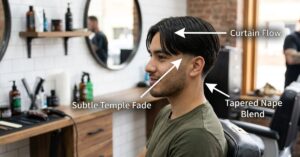
The classic low taper variation serves as the most popular entry point for men testing curtain hairstyles for the first time. The barber starts clipping at the very bottom of the sideburns and neckline, tapering only half an inch upward before blending into natural length. This conservative perimeter fade maintains maximum hair density around the parietal ridge, allowing the flowing top layers to merge seamlessly with the sides. You retain full coverage behind the ears while eliminating messy neck whiskers.
Top layers measure approximately four to five inches in length, terminating around the bottom edge of the earlobe when pulled straight. Because the sides remain relatively full, this cut produces an elegant, intellectual appearance that satisfies strict corporate dress codes and university classrooms alike. If you already admire the clean transitions found in a low taper fade straight hair style, this curtain variation takes that same disciplined fade foundation and enhances it with relaxed, stylish top volume.
Mid Taper Fade with Textured Curtain Bangs
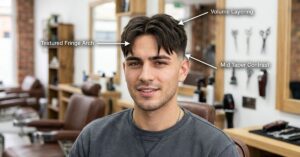
If you seek sharper contrast and an athletic, contemporary profile, the mid taper fade delivers dramatic visual punch. The barber elevates the fade transition up toward the midpoint of the temples, exposing more of the cheekbone structure and jawline. This elevated fade creates clean separation between the faded skin zones and the thick curtain layers draping forward from the crown. Young men favor this cut because it emphasizes sharp facial geometry while keeping hair out of the eyes during athletics.
To prevent the bangs from hanging like heavy curtains, experienced barbers deploy deep point-cutting techniques across the fringe ends. Removing microscopic weight blocks from the tips gives straight hair jagged, piecy separation that swings naturally when you walk. A small fingertip portion of matte paste worked into the bangs defines individual hair ribbons without introducing greasy shine. This versatile haircut transitions effortlessly from high-intensity workouts to upscale weekend dinner reservations.
Messy Fluffy Middle Part with Drop Taper Transition
The viral fluffy hair phenomenon took social media by storm, and pairing that voluminous texture with a middle part creates an irresistible youth trend. Rather than enforcing a sharp razor-straight parting line, this approach creates an organic, zigzag center split that feels effortless and lived-in. The hair top is cut with choppy razor layers that stand upward slightly at the crown before cascading outward in soft, airy clouds.
A drop taper complements fluffy straight hair beautifully by curving the fade downward behind the ears toward the base of the skull. This curved taper line follows the natural contour of the occipital bone, preventing the back of your head from looking flat or boxy. Young boys and teenage students gravitate toward this haircut because it tolerates playful disarray throughout the day. Much like the styling principles highlighted in our comprehensive guide on popular little boy haircuts, textured layers celebrate natural motion and handle active school days effortlessly.
Slick Polished Middle Part with Clean Razor Taper
For formal gala events, high-stakes business meetings, and black-tie weddings, the slick polished middle part offers immaculate old-school sophistication. This variation demands at least five to six inches of hair length across the top. Using a fine-tooth styling comb and a water-soluble styling pomade, you carve an exact millimeter-precise part down the center of the scalp before sweeping each wing backward behind the ears.
The barber finishes the perimeter with a foil shaver or straight razor, carving razor-sharp outlines around the temporal arches and neckline. The contrast between wet-look, glass-like straight hair and velvety skin fades creates an executive aesthetic reminiscent of classic Hollywood leading men. This formal haircut pairs exceptionally well with tailored suits, sharp blazers, and refined footwear, echoing the sophisticated aesthetic rules found in our guide on how to style olive green pants for men during smart-casual occasions.
Short Crop Middle Part with Tight Temple Taper
Men who prefer low-maintenance morning routines often assume middle parts require months of tedious hair growth. However, a short crop middle part delivers unmistakable curtain flair with only two to three inches of hair length. The barber cuts the top in compact textured layers, allowing the very front fringe to divide slightly into a micro-curtain right above the forehead.
Tight temple tapers eliminate all side bulk, keeping your head shape streamlined and sharp. This shorter iteration requires zero round-brush blow drying; simply towel dry your hair vigorously, apply a dime-sized amount of lightweight styling cream, and push the front fringe gently to both sides with your thumbs. Active men who sweat during daily cardio routines appreciate how quickly this cut dries and resets after showering. Furthermore, boys struggling with stubborn growth directions will find that this cut avoids the lifting issues discussed in our tutorial on haircuts for boys with cowlicks.
Barber Communication Guide: What to Request in the Chair
Sitting in a barbershop chair without clear terminology frequently leads to haircut disappointment. Barbers cannot read minds, and vague requests like “make it curtains” often yield unintended bowl cuts. When requesting a middle part taper fade straight hair, specify your exact taper height, desired fringe length, and preferred texturizing method. Ask your barber to preserve internal length around the crowns while removing bulk from the interior with thinning shears.
Always show clear visual reference photos that exhibit your exact hair texture. Point out your natural cowlicks or hair whorls before the barber wets your scalp, as wet hair conceals growth directions. The detailed consultation reference table below provides exact barber chair scripts to ensure you walk out with the precise haircut you envisioned.
| Target Style Feature | Exact Words to Tell Your Barber | Barber Technical Action |
|---|---|---|
| Subtle Perimeter Fade | Keep the taper low on sideburns and neckline only | Low skin taper with zero guard open blend |
| Flowing Curtain Fringe | Leave the front fringe reaching my eyelashes when pulled | Preserves 4 to 5 inches of frontal fringe weight |
| Feathered Texture | Point-cut the ends so the hair splits without heavy blunt lines | Deep vertical point-cutting and shear slide cutting |
| Weight Removal | Debulk the parietal ridge so the hair lays flat against my head | Internal texturizing shears applied to mid-shafts |
| Clean Back Neckline | Taper the neck softly rather than blocking it with a hard line | Graduated neck taper feathering into bare skin |
How to Blow Dry Straight Hair for Maximum Middle Part Volume
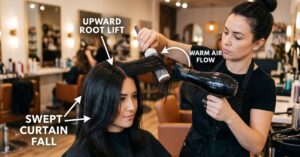
Straight hair requires heat styling to achieve that bouncy, arching curtain swoop seen in magazine editorials. Letting straight hair air dry out of the shower causes moisture weight to drag roots downward, leaving your parting flat and lifeless. The blow drying ritual takes under four minutes once you memorize the mechanics. Begin by patting your hair gently with a microfiber towel until damp, avoiding vigorous rubbing that creates static electricity.
Spritz three to five pumps of sea salt spray across the damp roots, combing the product backward from your forehead toward the crown. Fit a directional concentrator nozzle onto your hairdryer and select medium heat with high airflow. Use a round ceramic vent brush or your fingers to lift hair upward at the roots while aiming heat directly underneath the hair shaft. Once the roots dry standing upright, roll the brush backward and sweep the lengths outward to both sides. Finish by pressing the hairdryer cool-shot button for ten seconds across the part to lock that dynamic arch into place permanently.
Best Lightweight Styling Products for Natural Flow and Hold
Selecting inappropriate styling products quickly ruins straight hair curtains. Heavy petroleum pomades, greasy hair waxes, and stiff alcohol gels coat straight hair shafts, causing strands to clump together in oily cords that expose the scalp. To maintain natural movement, your grooming arsenal should focus on lightweight, matte-finish formulations that add friction without excess weight.
Sea salt spray stands as the essential foundational pre-styler for straight hair. The mineral salts coat each strand, expanding its diameter and providing textured grip that holds the parting open. For the finishing touch, styling powder or matte clay provides all-day pliability. Styling powders absorb natural forehead oils while delivering invisible root volume that you can refresh throughout the day simply by raking your fingers through your hair. A tiny fingertip of water-soluble matte paste spread through the tips tames stray flyaways without introducing synthetic shine.
Common Mistakes That Ruin the Straight Hair Middle Part Flow
The most frequent error men commit involves parting their hair down the center while soaking wet and letting it dry untouched. This creates the unflattering nineties mushroom cap shape, where hair hangs limp and glues itself to the sides of the face. You must train the roots upward before encouraging the ends outward. Failing to utilize upward root tension guarantees a flat, deflated appearance.
Another widespread misstep involves delaying barbershop maintenance for the taper fade. While the top curtain layers look great as they grow out over months, the low taper fade on your sideburns and neckline loses its crispness after three to four weeks. Overgrown neck hair blurs the contrast that makes this haircut look intentional and modern. Schedule a quick ten-minute perimeter cleanup with your barber midway between full haircuts to keep your taper sharp.
Daily Maintenance Routine for All Day Center Part Shape
Mastering your morning grooming routine ensures your middle part remains dependable in windy outdoor conditions. Wake up and evaluate your bedhead. If your parting shifted overnight, mist your hair lightly with warm water from a fine spray bottle to dissolve stubborn sleep kinks. Spray two mists of sea salt spray through the roots to replenish texture.
Take a blow dryer and blow the hair forward across your face for thirty seconds, then blast it upward and back for thirty seconds. This opposing directional airflow builds massive natural volume at the front roots. Allow the hair to split organically where gravity dictates rather than forcing a rigid center line with a comb. Dust a dime-sized sprinkle of texture powder directly into the root canopy, tousle with your fingertips, and you step out the door with camera-ready hair that lasts until midnight.
Frequently Asked Questions About Middle Part Taper Fades
How long does straight hair need to be to get a middle part taper fade? You need a minimum of three inches of hair length on top to establish a basic middle part, while four to five inches represents the ideal length for flowing curtains. At three inches, the hair splits into an athletic short curtain style. At five inches, the bangs reach the cheekbones, creating the classic flowing drape. The sideburns and neckline can be faded immediately regardless of your starting top length.
Does a middle part taper fade work on men with round or wide face shapes? Yes, this haircut flatters round face shapes exceptionally well when paired with a mid taper fade. The faded sides remove horizontal width around the ears, which instantly slims the face. Meanwhile, the vertical parting line and upward root volume add perceived height to your skull, creating a balanced, oval silhouette. Avoid excessively long fringe past the jawline, as very long curtains can accentuate facial roundness.
How do I prevent my straight hair middle part from falling into my eyes constantly? Preventing hair from invading your eyes requires root lift and texturizing. When blow-drying, direct heat underneath the fringe roots while pulling hair slightly backward away from your face. Furthermore, ask your barber to point-cut the very front tips so the fringe tapers off near the brow line. Applying sea salt spray and matte styling powder creates friction between strands, locking the wings outward away from your forehead.
Can young boys and teenagers pull off this haircut easily for school? Young boys and teenagers wear this haircut with remarkable success because it requires minimal product and withstands active recess games. The short tapered neckline keeps boys cool during physical education classes, while the textured top looks stylish and relaxed without violating school uniform guidelines. A thirty-second finger comb in the morning keeps the style looking sharp all day long.
Final Advice on Wearing the Curtain Taper with Confidence
The middle part taper fade straight hair hairstyle represents the ultimate fusion of classic nineties nostalgia and contemporary barbershop precision. It liberates straight-haired men from boring, uninspired buzz cuts and stiff, high-maintenance pompadours. By cutting the perimeter with a clean taper fade and layering the top for natural movement, you celebrate your hair’s natural straight flow. Invest in a quality hairdryer, stock a bottle of sea salt spray in your bathroom cabinet, and communicate clearly with your barber. When worn with confidence, this iconic haircut elevates your personal style across every personal, academic, and professional environment.